
15 things I would do if I were starting my developer career (Front-end)
Or if I could hop into a time machine and give advice to my past self

On this post
- Video version
- 1. I would learn English
- 2. I would learn programming logic
- 3. I would follow the references of the profession
- 4. I would focus on the basic Front-end languages
- HTML
- CSS
- JavaScript
- 5. I would learn one thing at a time
- 6. I would improve my soft skills
- 7. I would understand everything around my ecosystem
- 8. I would go to events
- 9. I would listen to more experienced professionals
- 10. But I would have my own opinion
- 11. I would avoid doing freelance gigs
- 12. I would take care of my mental health
- 13. I would do physical activities
- 14. I wouldn’t give up my hobbies
- 15. I would share my knowledge
This is an absolutely personal text, packed with clichés.
Everything I’m going to mention is only about my own reality. People have different opportunities and paces, so don’t feel bad if some of these things aren’t part of your reality, if you can’t put them into practice, or even if you disagree with something.
Some of these things I did in the past or do today, others I never put into practice and I think they could have brought important results to my career.
Video version
This is a video rework of this article (from 2020), with some updates and improvements over the original text (from 2017). Worth watching 😁
As complementary reading, I also recommend two other articles of mine:
- What Front-end Developers need to know
- How to study, practice and land opportunities as a (Front-end) Developer
So let’s go!
1. I would learn English
The mother of all clichés, present in 100% of the tips given by experts and also “experts”, from every profession. Still, it’s impossible not to agree with how important it is and the impact it has in any profession.
English ended up becoming a common denominator among the many languages, and honestly, if I could go back in time, even before starting my career, this would be my focus.
The advantages are many:
- Books
- Articles
- Podcasts
- Discussions
- Opportunities abroad
I think it’s possible to have a solid career (in Brazil) without fully mastering this language, despite the advantages listed above. The thing is that at some point having a good level of English starts making all the difference in reaching some career goals.
So I believe it’s extremely important to learn English, but alongside development, because contact with the language becomes daily anyway when you work with programming.
In other words, if I could go back in time, I would combine my studies of programming languages with English.
2. I would learn programming logic
 Credits:
123rf.com
Credits:
123rf.com
Since I had no programming background at the start of my career, I miss having a more solid foundation in programming logic concepts, algorithms and computer science in general.
I’m sure my code would be much better today.
So this is another point that, along with English, I consider fundamental for any developer, and I wish I had found that out sooner.
3. I would follow the references of the profession
I would follow the people who make the most impact on the development community and are seen as professional or technical references.
Then I would try to understand why they’re seen as references.
- What did they do?
- What did they create?
- What kind of professional attitude do they have?
- What do they eat?
- Where do they live?
And then I would get inspired to build my own story.
Sua evolução só deve ser comparada com a de uma pessoa:
- Você mesmo ontem
Ter outras pessoas como referências pode inspirar e abrir caminhos. Mas tente não se comparar com elas, pode fazer mal.
Somos universos com seus próprios acasos, histórias e contextos. Isso muda tudo.
That’s because each person is completely different, and even though I think it’s very important to have inspirations, I would compare my progress only with myself yesterday.
4. I would focus on the basic Front-end languages
I’ve always worked with web development, so these languages are:
- HTML
- CSS
- JavaScript
As simple as that.
Of course, within these languages we have millions of libs, frameworks, pre-processors, for example:
HTML
- Jade
- Pug
- Nunjucks
- Handlebars
CSS
- Stylus
- Sass
- Less
- PostCSS
- CSS Modules
- Styled Components
JavaScript
- React
- Angular
- Vue
- Svelte
- TypeScript
But under the hood, we’ve been using the same languages for many years, and we’ll probably keep using them for quite a while.
So, before going deep on any lib, I would study this basic (and magical) trio a lot.
Still on this topic, I strongly recommend reading the article: What Front-end Developers need to know 😁
5. I would learn one thing at a time
Being very practical, I would learn:
- Basic HTML, CSS and JavaScript (interface level)
- Then advanced JavaScript
First, because HTML and CSS naturally complement each other, and CSS especially is hella complex (write bad CSS and try to maintain it a year from now) and it’s already enough content for a long time of study.
Second, because even though it doesn’t make much sense these days, it’s possible to build projects using ONLY HTML and CSS, without a fucking line of JavaScript. To prove it you can check out this project of mine from 2014, CSS Components.
Third, because the logic of CSS and JavaScript is completely different, and that’s very confusing for beginners. Too much information, from such different languages, can be frustrating for someone starting out professionally.
So as soon as I was totally comfortable, I would dive headfirst into JavaScript, this language is powerful, amazing and has changed (and keeps changing) the world of development.
⚡ O desenvolvimento web pode ser dividido em dois períodos:
- A.N: Antes do Node.js
- D.N: Depois do Node.js
O Node.js está para web developers como o fogo está para a humanidade.
6. I would improve my soft skills
Melhore as habilidades técnicas, mas não esqueça das soft skills:
- Trabalho em equipe
- Profissionalismo
- Comunicação
- Criatividade
- Etc
Soft skills são habilidades como quaisquer outras e podem ser aprimoradas. E sim, elas são tão importantes quanto sua capacidade técnica.
Take soft skills to mean all your behavioral, emotional and social abilities.
Things like:
- Communication
- Teamwork
- Leadership
- Professionalism
- Flexibility
- Creativity
- Proactivity
- Empathy
- Etc
These skills are essential for any professional and are just as fundamental to career growth as technical aspects.
They can be developed, so I would definitely focus on developing these qualities from early on.
7. I would understand everything around my ecosystem
Development goes way beyond code.
So, to have an increasingly relevant professional life, I would seek to learn and understand from early on everything that surrounds my profession.
Thinking about Web Development, for example:
- Methodologies
- UX
- Design
- SEO
- Accessibility
And the job market itself and how companies expect to make money.
Believe it or not, all these things directly impact the quality of the code we write.
8. I would go to events
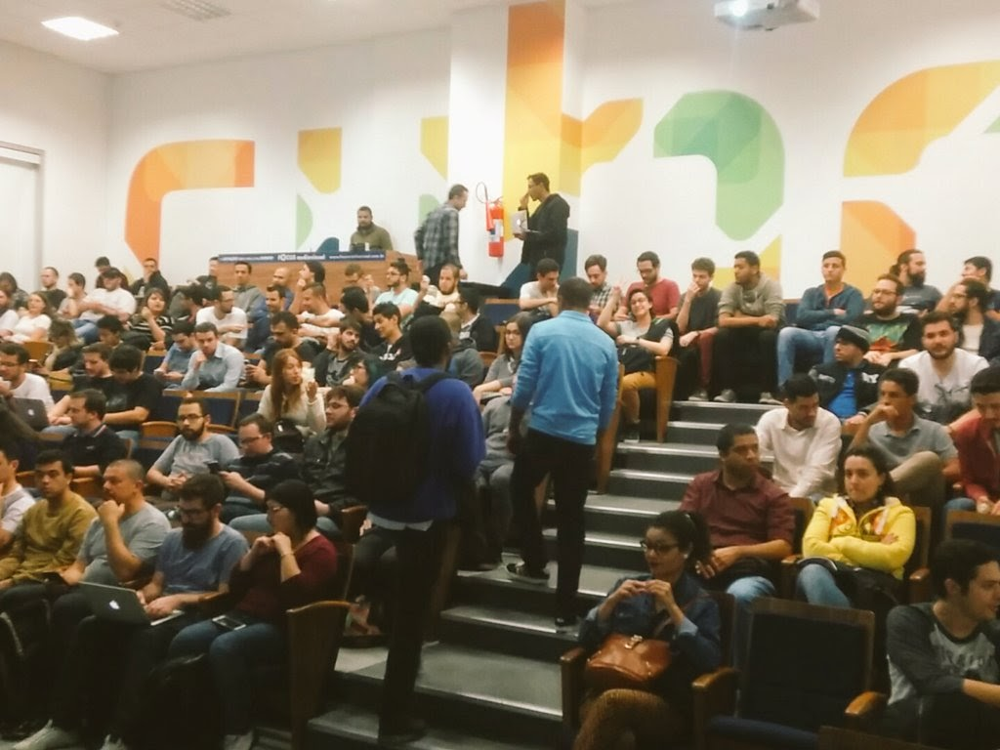 MeetupCSS at Cubo
I’ve written a few times about the importance of events for developers, so I won’t dwell on this subject.
I’d say smaller events like Meetups are even more interesting for people who are just starting out, they’re usually free and there’s more closeness between people.
If there were no event in the city where I live or on the subject I was studying, I would create my own event. Two people are already enough for a Meetup to happen 😉
Unfortunately I found out late how impactful events can be for a career, and I would definitely have started going as soon as my career as a developer began.
9. I would listen to more experienced professionals
People with many years in the profession have surely been through many situations that could be useful to me.
I wouldn’t hesitate to learn from and absorb as much as possible from more seasoned professionals, things like:
- Code patterns and tips
- Professional decisions and options
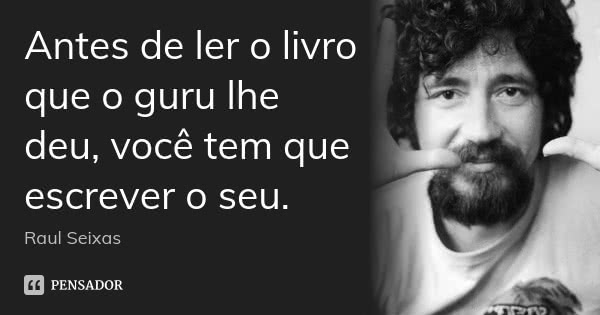
10. But I would have my own opinion
 pensador.com
A counterpoint to the previous tip.
It’s super important to learn from other people’s mistakes and wins, it helps you grow professionally, but those mistakes and wins are still… other people’s.
I would try to absorb everything more experienced professionals told me, but I would never take it as absolute truth.
I would always form my own opinions based on things I lived through, not on things I heard someone say.
11. I would avoid doing freelance gigs
Bernard De Luna and Zeno Rocha talked about this in 2012 and I still agree.
Obviously this tip doesn’t apply to those who make a living from freelancing.
And to be clear, as I said at the beginning of the text, people live in different realities, so this may make sense to me but maybe not to you. There’s nothing wrong with that.
When you freelance, many times you’ll get paid much less than you should and work much more than you should. Meanwhile, the person paying you will think they’re paying you way more than you deserve.
So, unless I needed extra income at the end of the month A LOT, I would avoid freelancing so I could focus fully on my studies, going to events and working on open source projects.
12. I would take care of my mental health
A serious problem, that hits a huge number of developers, and can lead to demotivation (in Portuguese).
We’re bombarded with a huge amount of information every day, new libs, new frameworks, new methodologies… it’s almost impossible to absorb all that knowledge.
I’ve been hit by this problem several times, especially during the most intense periods of study, which is a contradiction: the more you study and learn, the more you find out you’re far from reaching a state where you consider yourself a good professional.
Quanto mais eu aprender, mais coisas vou ter pra estudar e mais vou perceber que pouco sei.
Paradoxo developer.
It’s very hard to deal with, but here’s what I would do to protect myself from these problems:
- Set short-term personal goals
- Not compare myself to other people
- Learn one thing at a time
- Have hobbies that have nothing to do with work
- Do physical activities
- Avoid working or studying on weekends
13. I would do physical activities
I consider this another absolutely crucial point, after all, people who work with programming tend to spend many hours in front of the computer.
There are many kinds of physical activity and you can pick your favorite or whatever best fits your day-to-day, the most important thing is that it’s frequent.
- Gym
- Running
- Dancing
- Swimming
- Soccer
- Etc
You can also start slow, fitting the activity into your day, with things like:
- Walking to work
- Getting off a few stops or stations early
- Avoiding elevators
- Etc
Other things like better eating, increased focus and especially building better habits tend to come as a bonus when you start doing physical activities.
Besides improving your health, the result will definitely also show in the quality of your work.
14. I wouldn’t give up my hobbies
 Sacred Sunday soccer
It’s natural (unfortunately), when you’re focused on studies and professional life, for activities you loved doing and that kept you excited your whole life to take a back seat.
But that shouldn’t happen.
So I would always reserve space in my schedule to do all the activities I like and that make me feel good.
I wouldn’t give that up, it does the mind a lot of good, directly impacting tip number 12.
That also means I would rarely study or work on weekends, doing everything I could to spend that time well with people and things that made me happy.
15. I would share my knowledge
Conhecimento retido é conhecimento perdido.
I would never let the results of my studies, the lessons I learned on projects or the knowledge I gained stay only inside my brain.
That’s unthinkable.
So, from the start I would look for ways to share everything I was learning, whether by writing articles, recording podcasts or through videos.
Knowledge should be exchanged among all people… always!
And you? If you had the chance to go back in time or were starting your careers now, what would you do?
Catch you later! 🤘