
What Front-end Developers Need to Know
Simple answer: HTML, CSS and JavaScript. But simple is something Front-end Development stopped being a long time ago 😄

On this post
- Video version
- First, some data
- The basics of Web Development
- Domain and hosting setup
- Terminal
- How client-side and server-side communicate
- Git and Version Control
- HTML, CSS and JavaScript
- Let me give you an example
- And there’s the learning curve
- Perfect! So is knowing just this base enough? 😁
- Concepts and Methodologies
- Another good example, CSS-in-JS libs
- UX and UI
- Back-end and DevOps
- The soft skills
- Front-end Development Roadmap
- Conclusion
Video version
This is a video version of the content presented in this article that I published on my YouTube channel.
Worth watching! 😁
First, some data
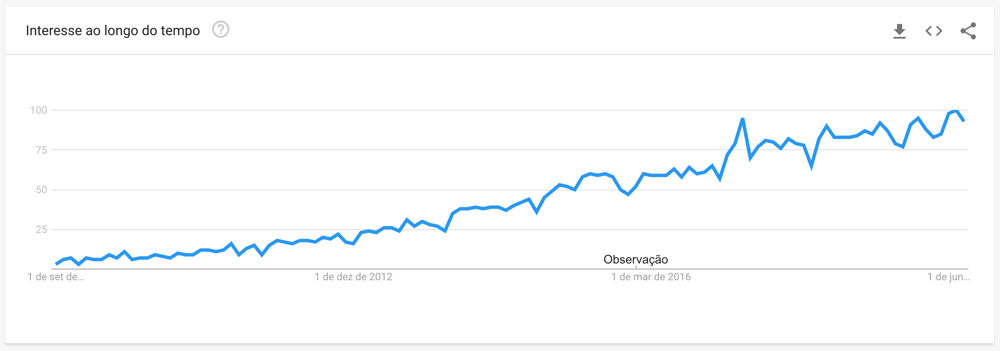
I looked at Google Trends for the interest in the terms Front-end Developer (Worldwide) and Desenvolvedor Front-end (Brazil), over the last 10 years.
The numbers represent search interest relative to the highest point on the chart for a given region and time period. A value of 100 is the peak popularity for a term. A value of 50 means the term was half as popular. A score of 0 means there wasn’t enough data for the term.
This was the result worldwide:
In Brazil, despite the ups and downs, the picture isn’t very different:
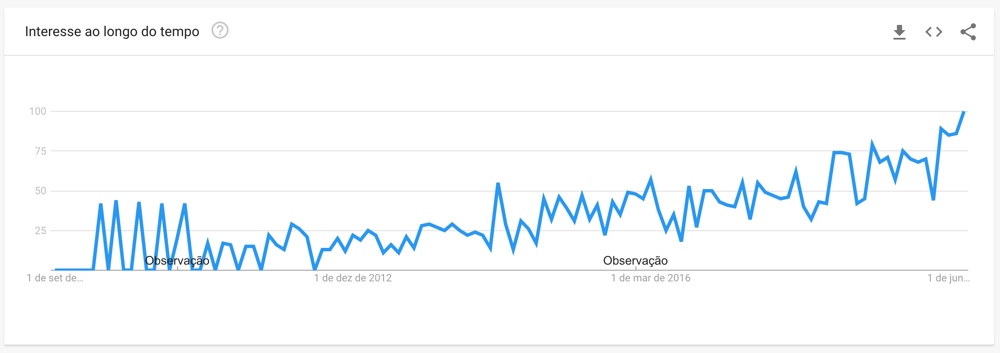
In other words, Front-end Development is still on the rise and should stay that way in the coming years. Companies are increasingly looking for this professional profile, and more and more people are interested and looking for information to get into this profession.
Some things that make sense right now might not make sense in the future. The development world moves extremely fast, and so do my opinions 😂
That said, I’m going to list some skills I consider important for working in this field. I’m not bringing the absolute truth and I’m far from having the knowledge for that, but I’m bringing the personal view of someone who has been doing this for 10 years, that is, me.
Let’s go! 😜
The basics of Web Development
These are things that cover web development in general and are extremely important for a solid career.
Domain and hosting setup
No matter what project you’re building or working on, it will be hosted somewhere and needs a domain configured.
We have more and more solutions that automate these steps, like Netlify, Heroku and AWS products. But these options won’t always be available, so it’s worth understanding how the process works and knowing how to set it up manually.
Terminal
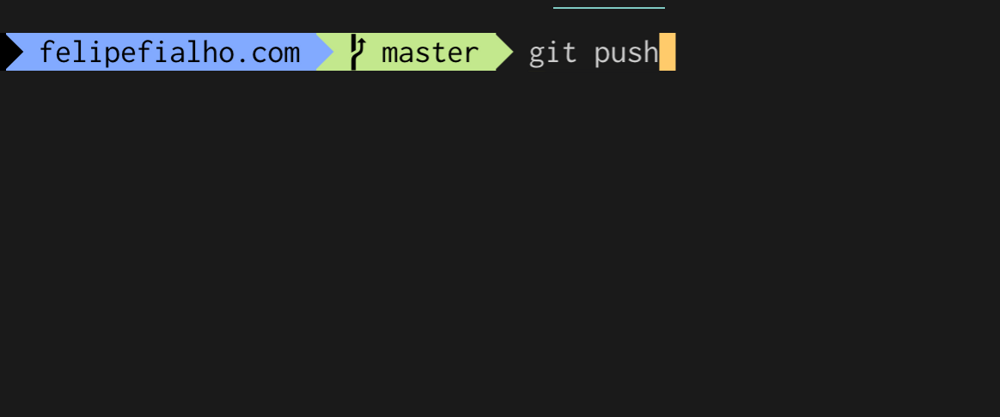
The terminal is still one of the most used tools in our day to day. A good part of the technologies used in modern Front-end Development need to be run from a terminal.
The good news is that we now have several libs with shortcuts that make this feature, often scary, easier to use. Also, some code editors like VSCode already have an integrated terminal, which helps a lot day to day.
How client-side and server-side communicate
It’s also very important to understand how client-side and server-side communicate. A good part of the work in Front-end development is integrating and interacting with APIs.
Some cool topics to study:
- Web Services, REST and GraphQL
- Operations: POST, GET, PUT, PATCH, and DELETE
- HTTP protocol
Akita’s YouTube channel (in Portuguese) has a bunch of videos explaining some of these topics really well, I suggest watching a few of them.
Git and Version Control
It’s almost impossible to imagine software development without a version control system. And for years now Git has been the biggest name in that category.
Spending some time studying Git and its commands is very important. Every project and product you work on should use this technology for code versioning, and it’s extremely powerful.
It’s also important to say that Git and Github are different things, just like Java and JavaScript.
java !== javascript
git !== github
Lots of people still mix them up, but Git is the version control technology. Github, Bitbucket, Gitlab and so on are sites with visual interfaces to browse and view the result of that versioning. Github, for example, also works as a social network for development.
HTML, CSS and JavaScript
Desenvolvimento Front-end, por baixo dos panos se resume em:
- HTML
- CSS
- JavaScript
Não ter essa base, seria tipo ser jogador(a) de futebol ⚽️, sem fundamentos básicos ou conhecer as regras do esporte.
Você pode até fazer uns gols, mas dificilmente vai ganhar os jogos. https://t.co/VP4URRjuta
It became a cliché, lots of people say to study the fundamentals (I say it all the time). And since we’re talking about Web development, behind the fantastic world of frameworks, in the end everything generates HTML, CSS and JavaScript, and that’s exactly why it’s so important to know these things well.
Let me give you an example
In recent years I’ve worked a lot with Angular, which is a JavaScript framework. Angular uses TypeScript, a superset of JavaScript. For styles I’ve been using Sass and PostCSS, the first is a CSS preprocessor and the second a CSS postprocessor.
In some projects I also use Kratos as a boilerplate, among the technologies are Webpack, which is a JavaScript module bundler, CSS Modules, which is a CSS modularizer, and Pug, which is an HTML template engine.
Throughout my (already long, 10 years man 😱😱) career, I’ve used technologies like jQuery (JavaScript), Jade (HTML), LESS (CSS), Stylus (CSS), Grunt (JavaScript), Gulp (JavaScript), Bootstrap (HTML, CSS and JavaScript) and so many others that made sense at the time.
This alphabet soup has one thing in common:
In the end they all use HTML, CSS and JavaScript
And there’s the learning curve
It doesn’t matter what new lib blew up in the market, or how complex that new technology everyone is talking about seems… the more you know about the holy trinity of front-end, the smoother your learning will be for everything that derives from them.
I like to create personal projects to learn new things, so when developing the new version of this site, I used a stack (in Portuguese) with technologies I had never worked with before. To name a few:
- JavaScript (Gatsby / React)
- CSS (Styled Components)
Even working on a completely new stack, with technologies I had never used before, in a few days I managed to learn these new concepts and get fluent in development.
That would be impossible if I didn’t have a good knowledge of the fundamentals.
Perfect! So is knowing just this base enough? 😁
“O que sabemos é uma gota, o que ignoramos é um oceano.”
Isaac Newton, discursando sobre desenvolvimento front-end
There are other essential things, and I’ll talk about some of them now.
Concepts and Methodologies
There’s not much point in mastering any technology if you don’t know what to do with it, or rather, don’t know what it’s for.
Every new development lib or technology created aims to solve some conceptual problem, to automate complicated things we face day to day, to improve processes and so generate more value for the final product.
Part of today’s JavaScript frameworks, for example, exist to solve componentization problems and some are based on the concept of reactive programming. These are things we were already trying to solve in other ways in the past. These technologies are the (re)evolutions of several techniques we already used before.
The development world is cyclical.
Frameworks estão para programação como a calculadora está para a matemática.
Facilita a vida, agiliza o trabalho e ajuda a evitar erros, mas não servem pra nada se você não souber que problema está resolvendo com eles.
Another good example, CSS-in-JS libs
At first lots of people turned up their noses (I was one of them), but they’re wonderful in the current development scene, since they use JavaScript to solve problems that CSS unfortunately doesn’t solve on its own.
We’ve always had class collision problems, so we created methodologies like BEM to help with that, and CSS-in-JS libs do it automatically.
In the past, using inline CSS was common, but it ended up becoming a bad practice because even though it avoids collisions and performs well, the scalability was terrible. What does CSS-in-JS also do? When necessary it injects some inline styles, but all automatically, with reusable and scalable code.
Like I said: Cyclical.
UX and UI
You don’t need to be a designer, but it’s ideal to have great layout sense, be detail-oriented and a perfectionist, and above all know how to work very closely with the people who handle design and user experience, explaining possible technical limitations and proposing improvements during development.
 Credit:
uxdesign.cc
Credit:
uxdesign.cc
During the Front-end development boom a few years ago, it was common to say the field would split into two types of professionals: those focused on Engineering (JavaScript) and those focused on Design (CSS). I thought so too, but I don’t think the profession went that way, nor that it makes sense today.
I understand there are different profiles, and that naturally some people will feel more comfortable creating algorithms, while others will enjoy building interfaces more. But they go hand in hand, more and more.
User experience is what separates incredible products, which you love using every day, from not-so-great ones. UX also involves accessibility and usability, which are essential points.
In the end, Front-end Development translates into code the whole experience designed by the UX/UI team. And experience goes from a beautiful, accessible and pleasant-to-navigate interface, to a project that performs well, loads fast and doesn’t drain the battery or data plan of the person accessing it.
It doesn’t matter how wonderful the code is if it doesn’t deliver a badass experience to the end user. Incredible code producing a product with bad UI/UX will only serve to stroke the ego of whoever built it.
Back-end and DevOps
 Credit:
@sepandassadi
Credit:
@sepandassadi
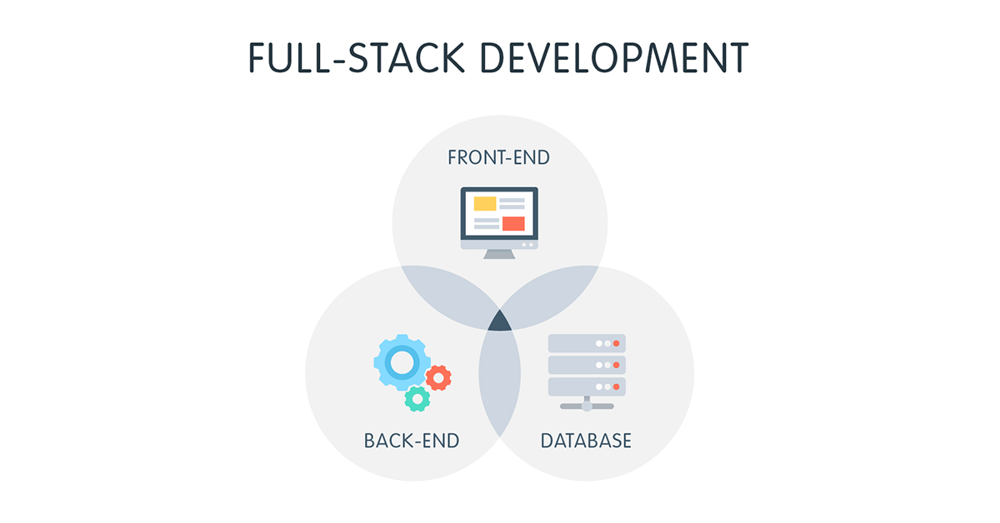
First I need to say that I do believe in the Fullstack Developer myth. These people exist, they’re out there and they’re more common than you’d think. And contrary to what people say, I also don’t think they have technical deficits for not being specialized. Maybe so, but not always.
Some of these people went beyond having just one specialization to having several. Totally possible, over many years of career.
Also, someone who’s Fullstack on one stack won’t necessarily be Fullstack on another stack, and won’t completely master every area of product development. I think the term says the person would be able to actively take part in every stage, that is:
- Front-end
- Back-end
- DevOps
In the Front-end world, the possibility of being Fullstack within some projects grew a lot with the advent of technologies like Node.js years ago and Serverless nowadays.
É Front-end Developer e quer se aventurar com Back-end?
Indico a stack:
- Node.js + Serverless
Node é o JavaScript de sempre e com Serverless, você não precisa se preocupar com infraestrutura.
A curva de aprendizado tende a ser menor e pode dar confiança pra seguir em frente.
But do I need to be Fullstack? 😱
As always, it depends.
It depends a lot on the company you work for, the companies you want to work for, and the career plan you want to follow.
I also wouldn’t worry too much about it early in your career, Front-end already has enough content to keep you busy for a few years. Maybe early on it’s worth getting a superficial idea of how other stages of development work, but you don’t need to go that deep.
However, over time I think it’s important to gain more knowledge, even if you don’t specialize much in these sister areas, I think it’s increasingly important to learn about them. That knowledge tends to even improve your skills as a Front-end Developer.
Some of the biggest and best companies in the world, like Google, AWS and many others, look for professionals with this Software Engineer profile. Also, the transition into leadership roles is easier thanks to the broader view of all the stages of development.
The soft skills
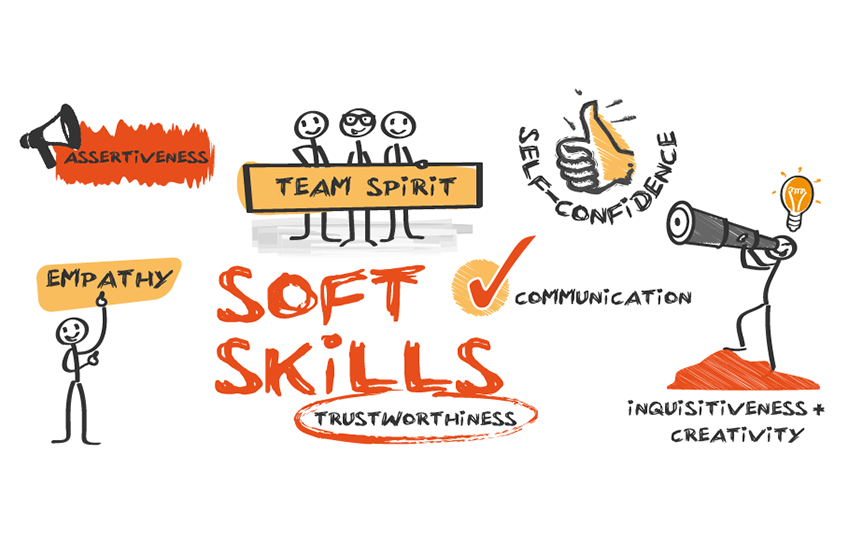
You’ve probably heard many times about the importance of developing your soft skills. But you should hear it even more. Seriously, they’re essential, we need to improve as people to deal with other people.
 Credit:
ied.eu
Credit:
ied.eu
Think of soft skills as all your behavioral, emotional and social abilities. That is, while hard skills are technical abilities that are easy to assess, soft skills are extremely subjective and hard to evaluate.
That caricature of programmers with poor social skills makes less and less sense in the job market. No matter how shy you are, it’s increasingly important to improve your communication and develop your interpersonal skills.
Also, you need to understand the product you’re working on.
And it makes a lot of sense!
First, because the technical view and logical reasoning of developers can help a lot in coming up with ideas, your contribution is extremely valuable.
Second, because as I said above, we don’t write code for the sake of code, we build things for people to use. Improving your ability to understand the end user’s needs directly impacts the quality of development.
The emotional side is also very important, knowing how to handle pressure, prioritize your tasks and receive (and also give) feedback are factors we need to work on day after day.
We also need to strive for a balanced life, because of the nature of this profession it’s very easy to get swallowed by code, neglecting our health (physical and mental) and also our personal life. Knowing how to balance all of this is also a soft skill, and one of the most important, if you’re not well with yourself, you won’t be able to do your best.
A vida é tipo um "The Sims", temos barras de satisfação em:
- Saúde
- Vida pessoal
- Vida profissional
Se uma delas diminuir, as outras duas serão afetadas e também vão diminuir.
A diferença é que não dá pra começar de novo se der ruim.
Bora se cuidar 👊
Front-end Development Roadmap
If you want to go deeper into modern Front-end Development topics, a good tip is to check out roadmaps and diagrams.
They show the “path of least resistance” through some technologies and concepts you’ve surely seen or will see during your career. And what’s more, they’re frequently updated as new relevant technologies or concepts appear.
I’ll leave two of them here, both in English:
Conclusion
We spend 8 hours a day working and many more getting to the office or studying (in Portuguese).
Each application we build can positively impact the daily lives of many people all over the world: automating their tasks, making content easier and more accessible, or even bringing mobility and a better quality of life to them. All of this becomes possible through technology.
Our work is challenging and exciting. Day after day we’re challenged with new technologies and new paradigms.
From time to time we need to let go of old ideas and concepts so we can build a better professional (and personal) version of ourselves.
That’s badass! ❤️